


Olio App Review: Is It Worth Using for Free Food in the UK?
Updated: Aug 4

What is the Olio app, and is it actually worth using?
Food inflation and the cost of living crisis mean that, for many of us, money simply does not go as far as it used to, especially at the supermarket. I have noticed it myself. Our weekly shop is easily around 20% more expensive than it used to be, yet my income has not increased to match.
That means making changes. Cutting back, switching brands, or being more deliberate about what goes into the trolley. For some households, it goes further than that, and food becomes something you have to think about more carefully than ever before.
This is where apps like Olio come in.

Olio is a free food waste reduction app that connects people locally so surplus food and household items can be shared instead of thrown away. It allows you to collect free food from neighbours and local businesses, and also gives you a way to pass on things you no longer need.
Olio has already helped share over 140 million meals worldwide, showing just how widely it is being used to reduce waste and help people save money.
At its core, it is a simple idea. Instead of food being thrown away, it gets redistributed within the local community. For users, that can mean picking up everyday items for free and reducing the cost of your weekly shop without much effort.
My experience using Olio
The first time I used Olio, it was for two loaves of bread from someone just a street away. I needed bread anyway, so it made sense to give it a try rather than heading to the shop and spending money.
I requested it through the app, got a reply within a minute, and was told it would be left in a box on the doorstep. That suited me perfectly. No knocking, no awkward conversations, just turn up, collect it, and go. From opening the app to picking up the food took about 10 minutes.
I did hesitate slightly. Not because it felt embarrassing, but because it is not something I would normally do. Turning up at someone’s house for food feels a bit unusual, especially if you are particular about food, which I am. I have OCD, so I do think about things like that more than most.
In reality, there was nothing to worry about. Everything was clean, packaged properly, and exactly as described. After that first experience, any concerns disappeared.
Since then, I have also used Olio to give things away, and the process works just as smoothly from the other side.
How does food get onto the Olio app?
Most of the food you see on Olio comes from two places, local households and local businesses.
Supermarkets and food retailers often have surplus food that cannot be sold but is still perfectly safe to eat. Instead of throwing it away, Olio volunteers collect it and take it home. They then photograph each item and upload it to the app so people nearby can request it.
Alongside that, everyday users list food they no longer need. That might be unopened cupboard items, surplus fruit and veg, or things they bought and never used.
Once something is listed, you request it through the app and arrange a collection time. In many cases, it is as simple as picking it up from a doorstep.
How can you become an Olio volunteer?
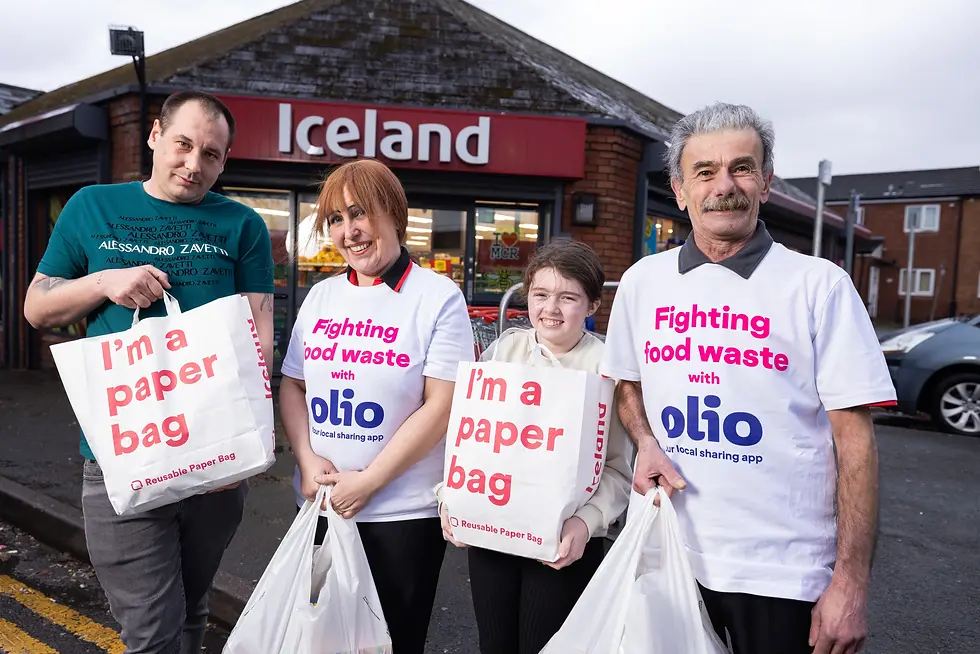
One of the reasons Olio works so well is because of its network of volunteers. These are everyday people who give up a bit of their time to collect surplus food from local businesses and ensure it's shared rather than thrown away.
If you have ever wondered where a lot of the supermarket food listings come from, this is it.
Becoming an Olio volunteer is open to pretty much anyone. You apply through the app or website, and if accepted, you are given access to collections from local retailers. That usually involves picking up surplus food from a shop at a set time, taking it home, and then uploading it to the app for others nearby to request.
It is not a paid role, but there are a few practical benefits. Volunteers are allowed to keep a small portion of the food they collect, which can help with their own food costs. The rest is shared with the local community.
There is also some responsibility involved. You need to be reliable, stick to collection times, and make sure the food is handled safely and listed accurately. If you do not turn up or follow the guidelines, you may lose access to collections.
For some people, it is a way to give back locally. For others, it is a practical way to reduce their own food spending while helping others.
Either way, it plays a big role in keeping the app active and ensuring a steady stream of food is available in many areas.
What can you actually get on Olio?
Most people start using Olio for food, but it is not just about food.
There is usually a steady mix of items available, depending on your area. You might see things like bread, fruit, vegetables, chilled items, and packaged food from local shops.
At the same time, there is a whole non-food side to the app that is often overlooked. People regularly give away things like:
Clothes and shoes
Kitchen equipment
Kids’ toys and baby items
Small furniture
Storage and household bits
I have seen everything from yoga mats to laundry baskets and even building materials being given away.
There is also a section where people can lend items locally, which is useful for things you only need once.
On top of that, there is a “wanted” section where you can ask for something specific, and a community space where people share recipes, tips, and ideas to reduce waste and save money.
Some non-food items can be sold rather than given away, but most listings are free.
Can you rely on Olio?
Olio works best as a way to reduce your overall spend rather than something you depend on completely.
In busy areas, listings often flow steadily throughout the day. You can pick up items regularly, and it can make a noticeable difference to your weekly shop over time.
That said, it is not guaranteed. Some days there will be more available than others, and you cannot predict exactly what will come up.
Where it really works is when you treat it as a bonus. If you can pick up bread, fruit, or a few essentials you would have bought anyway, you have saved money without much effort.
Olio vs Too Good To Go
Olio is often compared to Too Good To Go, but they work in slightly different ways.
With Olio, you see exactly what is available, and you request specific items. There is no cost for most listings, and you know what you are getting before you collect it.
With Too Good To Go, you usually pay a small amount for a “magic bag” from a shop or café. You do not know exactly what will be inside, so it is more of a lucky dip.
Here is a simple comparison:
Feature | Olio | Too Good To Go |
Cost | Mostly free | Paid (discounted) |
What you get | Specific items | Surprise bags |
Source | Households and businesses | Mainly businesses |
Certainty | High | Low |
Best for | Specific products | 'Mystery' bundles of food |
If you like knowing what you are getting, Olio is the better option. If you are happy to take a chance for a bargain, Too Good To Go can work well too. A lot of people end up using both!
How big is Olio, and how many people use it?
Olio is no longer a small niche app. It now has around 9 million users worldwide, and that number continues to grow.
More than 140 million meals have been shared through the platform, along with over 16 million household items. There are also over 100,000 volunteers helping to collect and redistribute surplus food from businesses.
There have been tens of millions of local collections, which shows that people are not just downloading the app; they are actively using it.
The environmental impact is significant as well, with hundreds of thousands of tonnes of CO₂ emissions avoided and billions of litres of water saved through reduced food waste.
Beyond that, many users report that it has helped improve their financial situation, and for some, it has had a positive impact on their well-being, too. It is not just about saving money on food; it's about making better use of what already exists.
Is the Olio app free to use?
Yes, the Olio app is free to download and use.
You can download it from the Apple App Store or Google Play and start requesting items straight away without paying anything.
There is an optional paid membership, Olio Supporter, that provides early access to listings and additional features. For most people, the free version is more than enough.
FAQs about the Olio app
Can you get free food on Olio?
Yes, most of the food on Olio is free. You simply request it and arrange a collection with the person listing it.
How do you get food from Olio?
You browse items near you, request what you want, wait for approval, and then collect it at the agreed time. It is usually a quick doorstep pickup.
What supermarkets use Olio?
Olio partners with a range of supermarkets and local retailers. Availability depends on your area, but surplus food from shops is regularly listed by volunteers.
Can you put expired food on Olio?
No. Food should still be safe to eat. Items past their use-by date should not be shared, but food past its best-before date can sometimes be listed if still safe.
Can you put opened food on Olio?
Generally no. Most listings are unopened items, although some exceptions exist if clearly described and safe.
Can you sell stuff on Olio?
Yes, non-food items can sometimes be sold, but the platform is mainly used for giving things away.
Do you have to pay to use Olio?
No, the app is free. There is an optional paid upgrade, but it is not required.
How does Olio make money?
Olio makes money through optional memberships, business partnerships, and some paid features within the app.
Is Olio like Too Good To Go?
They are similar in purpose, reducing food waste, but they work differently. Olio is mostly free and item-specific, while Too Good To Go is paid and based on surprise bags.
Is Olio just for people on benefits?
No. Olio is used by a wide range of people. Some use it to save money, others to reduce waste, or to help their community.
What happens to food that is not claimed?
If food is not collected, it may be offered to someone else or disposed of if necessary. Volunteers aim to make sure as much as possible is used.
Is there a limit on Olio?
There is no strict limit, but users are expected to be fair and not request more than they need.
Is the Olio app worth it?
If you are happy to collect locally and keep an eye on listings, it can save you money with very little effort. It works best alongside your normal shopping rather than replacing it completely.


